How often should a kitchen extract system be cleaned?
There is no honest one-size-fits-all calendar. A quiet hotel breakfast kitchen and a seafront takeaway frying all day do not produce the same grease load — so they should not share the same cleaning dates.
What drives frequency
- Cooking style — deep frying and charcoal grilling load systems faster
- Hours of operation — longer service windows mean more deposit
- System design — short canopies vs long duct runs change risk
- Seasonality — coastal parks and seafront sites spike from Easter to October
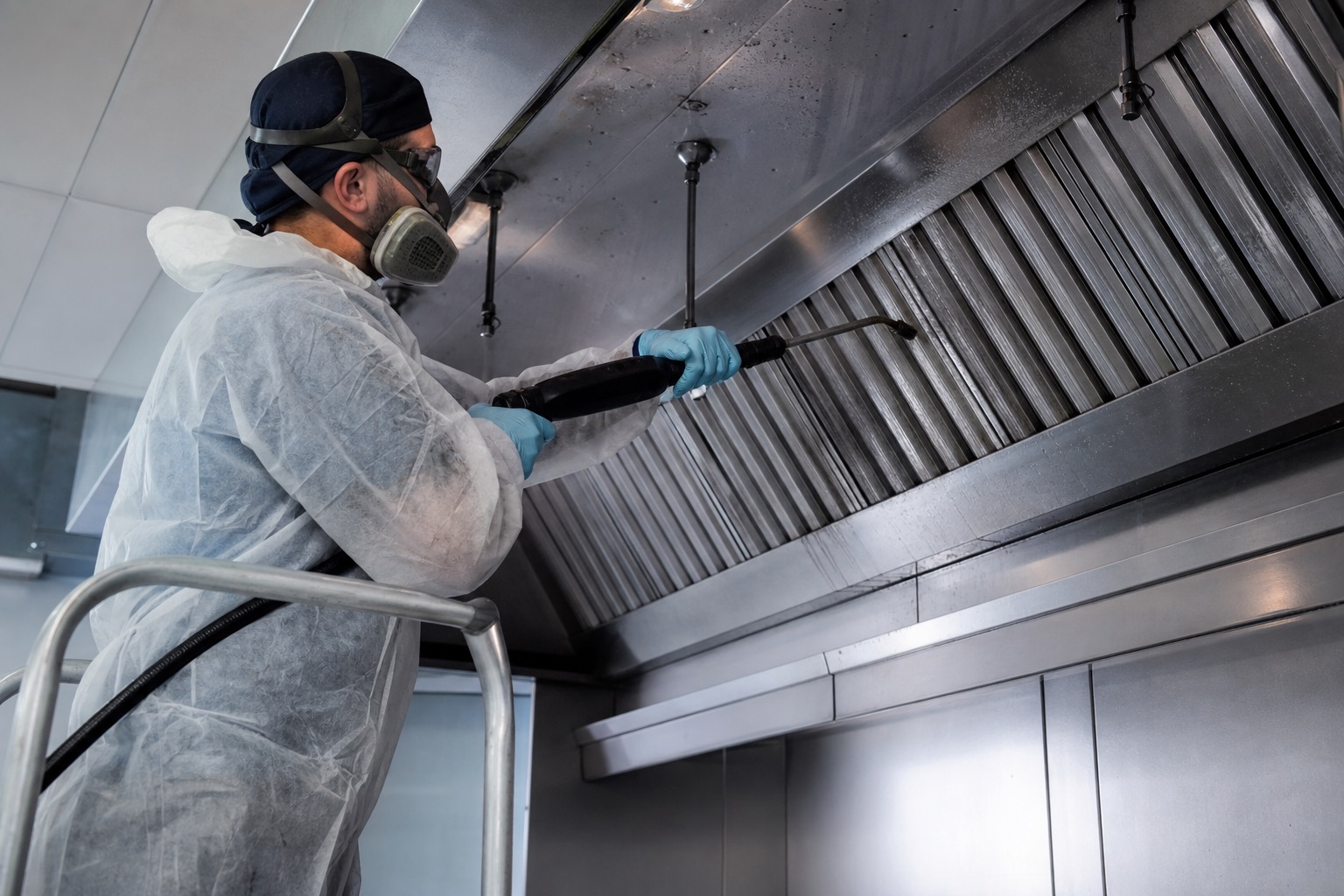
TR19 guidance links cleaning intervals to grease production. The practical step is a kitchen extract survey that looks at your system, not a chart printed for every kitchen in Britain.
Coastal Lincolnshire examples
A Skegness chip shop may need dense filter cleans and frequent canopy work between full duct cleans. A Cleethorpes hotel breakfast line may sit on a longer TR19 cycle with lighter interim visits. Park outlets in Ingoldmells often need a pre-season full clean plus mid-season filter programmes.
Filters between full cleans
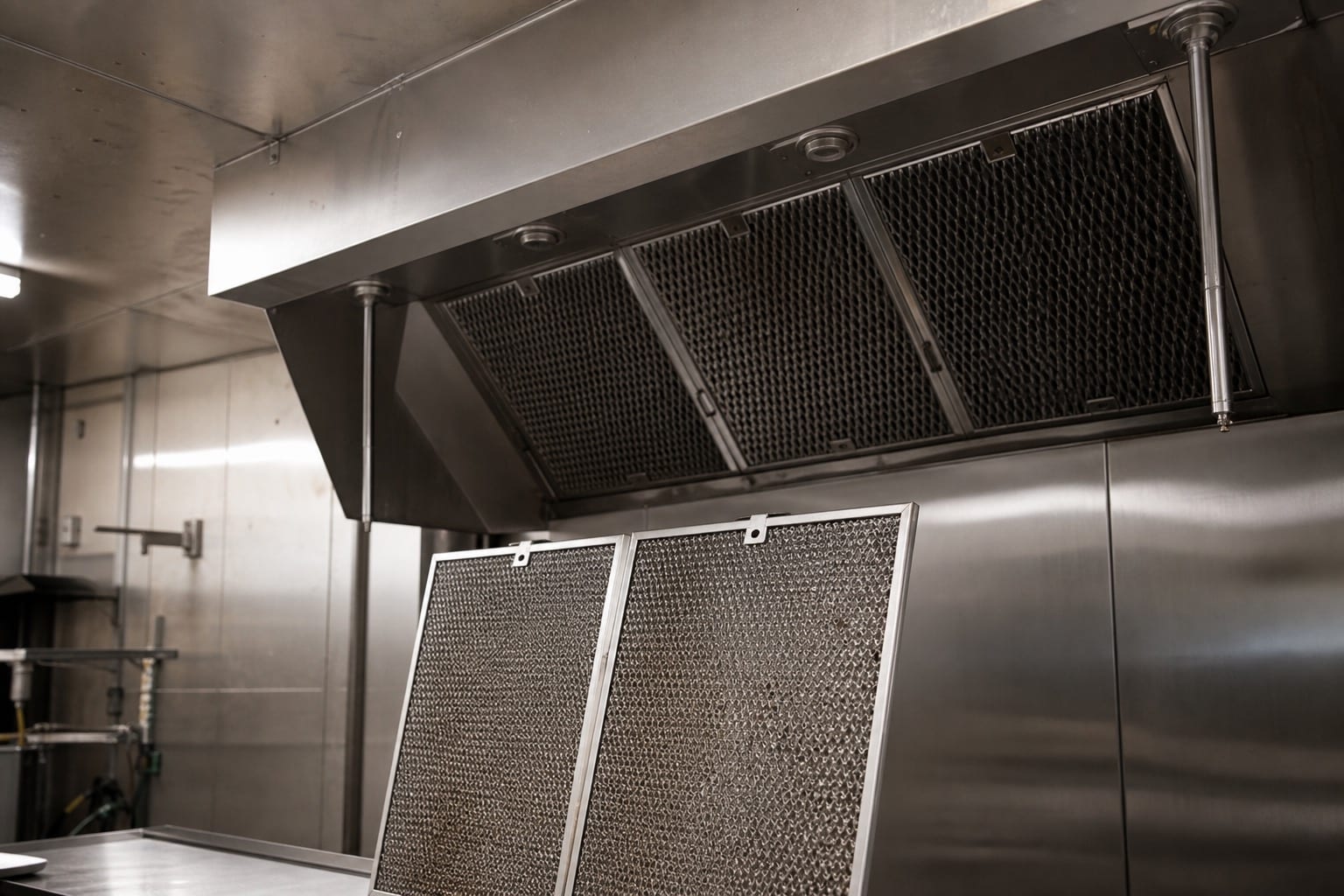
Many operators keep full TR19 duct cleans on a longer cycle and book grease filter cleaning more often. That stops clogged baffles pushing grease deeper into the duct while you wait for the next major visit.
Set the programme properly
Guessing from a neighbour’s schedule is a weak plan. Ask for a kitchen extract survey, agree scope and cadence, then book a TR19 clean that fits your covers.
Heavy frying? Shorter gaps. Light breakfast cook-off? Longer gaps — after someone has looked at your extract.